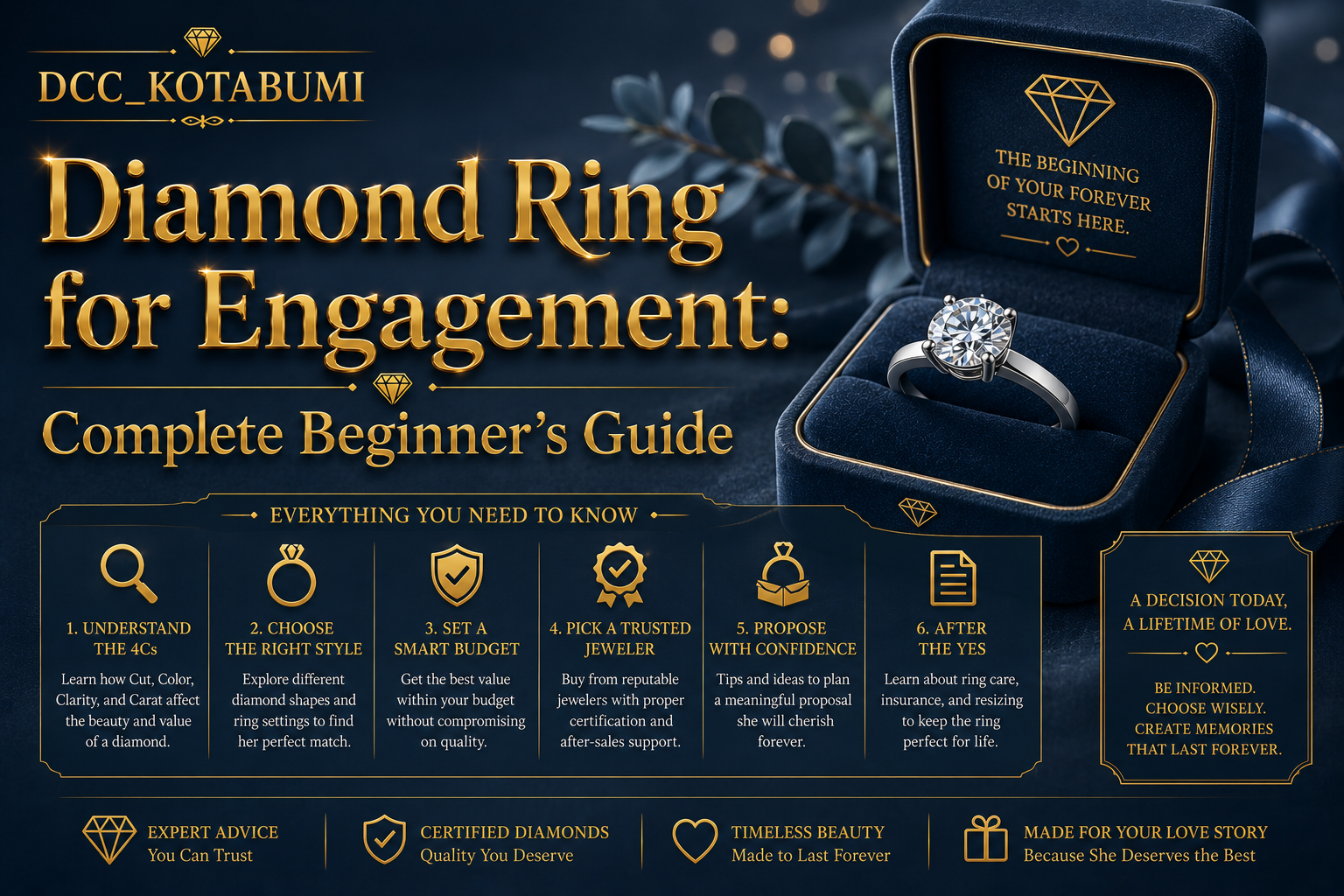
Diamond Ring for Engagement
Choosing a diamond ring for engagement can feel exciting and overwhelming at the same time. You want something beautiful, meaningful, and within your budget-without getting tricked by confusing jargon.
The good news: you don’t need to be an expert to buy smart. With a few clear guidelines, you can confidently choose a ring that looks amazing, lasts forever, and fits your partner’s style.
This complete beginner’s guide breaks down everything you need to know-step by step-from diamond quality and ring settings to sizing, budgets, and where to buy.
What Is an Engagement Diamond Ring?
An engagement ring is traditionally given during a proposal to symbolize commitment and the plan to marry. A diamond engagement ring is the most popular choice because diamonds are durable, timeless, and hold their sparkle for decades.
But “diamond ring” doesn’t mean only one style. It can be a classic solitaire, a modern halo, a three-stone design, or even a hidden halo with extra sparkle. Your job is to choose the one that matches your partner’s taste and your budget.
Why Diamonds Are the Most Popular Choice for Engagement Rings
Diamonds have three big advantages:
Durability for Daily Wear
Engagement rings are worn every day. Diamonds are among the hardest natural materials, making them ideal for long-term wear.
Timeless Look
Trends change, but diamonds remain elegant across generations. A well-chosen ring still looks beautiful 20 years later.
Strong Symbolism
Many people see diamonds as a symbol of strength, loyalty, and lasting love.
The 4Cs Explained in Simple Terms
The 4Cs are the global standard for evaluating a diamond: Cut, Color, Clarity, and Carat. Beginners often focus on carat size, but the smartest buyers prioritize cut first.
Cut: The Biggest Sparkle Factor
Cut determines how well the diamond reflects light. A well-cut diamond looks brighter and more expensive than a larger diamond with a weak cut.
What to Choose
Look for:
-
Excellent or Ideal cut for round diamonds
-
For fancy shapes (oval, princess, emerald), prioritize strong light performance and symmetry
Color: How White the Diamond Looks
Diamond color is graded from D (colorless) to Z (noticeable yellow/brown).
Beginner-Friendly Sweet Spot
Most people choose:
- D–F: icy white (premium)
- G–H: looks white in most settings (best value)
- I–J: slightly warm, still beautiful-especially in yellow gold
Clarity: How Clean the Diamond Appears
Clarity measures small internal marks (inclusions) and surface marks (blemishes). Most inclusions are invisible without magnification.
Best Value for Beginners
Choose “eye-clean” diamonds such as:
- VS2 or SI1 (often looks perfect to the naked eye)
- VVS/IF is premium but often unnecessary for beauty
Carat: The Diamond’s Weight and Size
Carat affects price dramatically. But size also depends on the cut and shape.
Smart Carat Tips
-
Consider “magic sizes” just under popular weights:
-
0.90 ct instead of 1.00 ct
-
1.40 ct instead of 1.50 ct
These can look nearly identical but cost less.
-
Natural vs Lab-Grown Diamonds: Which Should You Choose?
This is one of the biggest decisions today. Both can look identical.
Natural Diamonds
Natural diamonds form over billions of years. They often have higher resale perception and traditional value.
Lab-Grown Diamonds
Lab diamonds are created using advanced technology and have the same physical and chemical properties as natural diamonds. They’re typically more budget-friendly and allow you to get a bigger or higher-quality stone for the same price.
Beginner Tip
If you want the best size and quality for your budget, lab-grown can be a strong choice. If tradition and rarity matter most, go natural.
Choosing the Right Diamond Shape
Diamond shape affects style, sparkle, and how big the stone looks.
Most Popular Shapes for Engagement Rings
- Round Brilliant: maximum sparkle, most classic
- Oval: elegant and looks larger than round
- Princess: modern, sharp sparkle
- Cushion: soft corners, romantic vintage feel
- Emerald: classy “hall of mirrors” sparkle, less flashy but very elegant
- Marquise/Pear: unique, flattering on the finger
Shape and Finger Style
Different shapes can visually change finger appearance:
- Oval, marquise, and pear can make fingers look longer
- Round and cushion feel balanced and timeless
- Emerald and radiant feel sophisticated and bold
Ring Settings: How the Diamond Is Held
The setting affects both appearance and practicality.
Solitaire Setting
One diamond, simple and classic. Great if you want the diamond to be the star.
Halo Setting
Small diamonds surround the center stone, making it look larger and brighter. Great for extra sparkle.
Three-Stone Setting
A center stone with two side stones—often symbolizing past, present, and future.
Bezel Setting
A metal rim surrounds the diamond. Very secure and modern-great for active lifestyles.
Pavé Setting
Tiny diamonds line the band. Adds sparkle but needs careful maintenance.
Picking the Best Metal for an Engagement Ring
Your metal choice impacts color, durability, and overall style.
White Gold
Popular and elegant, but usually needs re-plating over time to keep its bright white look.
Yellow Gold
Warm and classic. Also very forgiving for diamonds with slightly warmer color grades.
Rose Gold
Romantic and trendy but still timeless. Looks great with many skin tones.
Platinum
Strong, naturally white, and premium. Costs more but lasts long and feels substantial.
Beginner Tip
If your partner wears mostly silver-toned jewelry, choose white gold or platinum. If they wear warm-toned jewelry, yellow or rose gold is often better.
Engagement Ring Budget: How Much Should You Spend?
Forget the old “rule” about spending a certain number of months’ salary. The best budget is what you can afford comfortably without stress.
A Simple Budget Plan
-
Set a maximum amount you’re comfortable spending
-
Prioritize what matters most:
- Bigger size?
- Better sparkle (cut)?
- Premium metal?
- Extra diamonds on the band?
Best Value Strategy
For most beginners:
- Prioritize Excellent/Ideal cut
- Choose G-H color
- Choose VS2 or SI1 clarity (eye-clean)
- Adjust carat size to fit the budget
How to Choose the Right Ring Size Secretly
Getting the ring size right is important-but it’s okay if it’s not perfect. Most rings can be resized.
Easy Ways to Guess Ring Size
- Borrow a ring your partner wears on the ring finger (same hand if possible)
- Ask a close friend or family member
- Trace the inside of a ring on paper (not perfect, but helps)
Beginner Tip
If unsure, go slightly larger. Resizing down is often easier than resizing up.
Diamond Certification: What You Must Check
A certified diamond comes with a grading report from a trusted lab. This protects you from overpaying.
Common Trusted Labs
- GIA (highly respected for natural diamonds)
- IGI (common for lab-grown diamonds, also used for natural)
- AGS (known for cut quality, depending on availability)
When buying, always ask to see the certificate and confirm the details match the diamond.
Where to Buy an Engagement Diamond Ring
You generally have three options: online, local jewelry stores, or custom jewelers.
Buying Online
Online sellers often have larger inventory and competitive pricing. You can compare cut, color, clarity, and carat quickly.
Buying In-Store
You can see rings in person and get help on sizing, comfort, and style. Great if you want hands-on guidance.
Going Custom
Custom is perfect if your partner wants something unique. It can be surprisingly affordable depending on the design.
Beginner Tip
No matter where you buy, check:
- Return policy
- Warranty and maintenance
- Certification
- Resizing options
Common Beginner Mistakes to Avoid
Focusing Only on Carat Size
A larger diamond with poor cut can look dull. Always prioritize cut quality.
Buying Without a Certificate
If there’s no reputable grading report, you’re taking a risk.
Ignoring Lifestyle
If your partner works with their hands or is very active, choose a secure setting like bezel or low-profile prongs.
Choosing Style Without Knowing Their Taste
Pay attention to their jewelry habits. Minimalist? Vintage? Glam? Matching their style matters more than following trends.
Quick Checklist Before You Buy
Must-Do Checklist for Beginners
- Choose the diamond shape your partner will love
- Prioritize cut quality for sparkle
- Stay in value ranges (G–H color, VS2/SI1 clarity)
- Pick the right setting for lifestyle
- Choose a metal that matches their jewelry
- Confirm certification and return policy
- Get the best size estimate possible
Final Thoughts: How to Buy With Confidence
A diamond engagement ring is more than a purchase-it’s a symbol, a promise, and a memory that lasts a lifetime. The best ring isn’t the biggest or the most expensive. It’s the one that fits your partner’s style, sparkles beautifully, and feels right for your relationship.
Start with a budget, prioritize cut, choose a style you know they’ll love, and always buy from a trusted seller with certification. If you follow these steps, you’ll feel confident-and your ring will look incredible every time it catches the light.
If you want, tell me your budget range (example: $500–$1,000 / $1,000–$2,000 / $2,000+) and whether you prefer natural or lab-grown, and I’ll recommend the best beginner-friendly spec combination (shape + 4Cs + setting) to maximize sparkle and value.