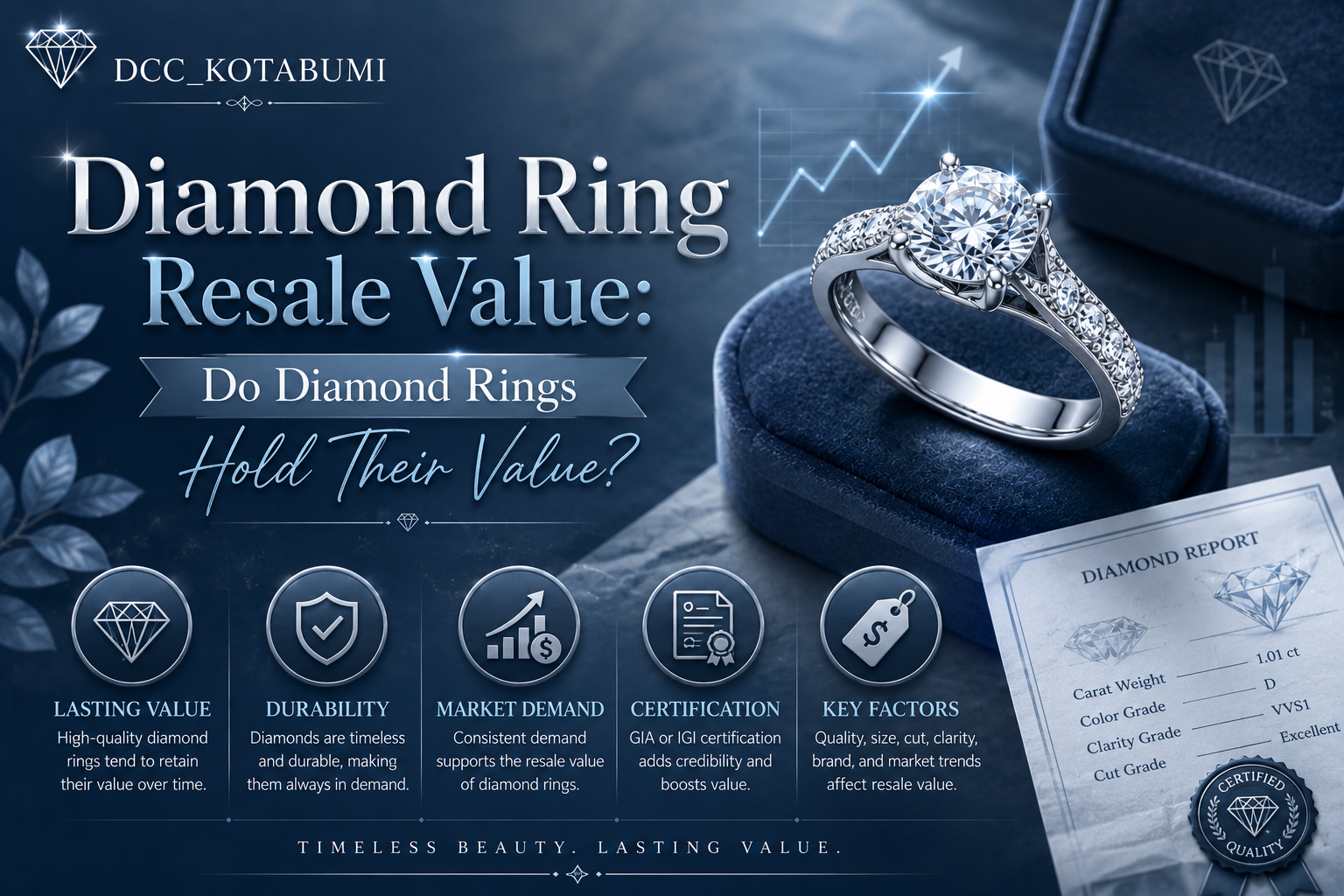
Diamond Ring Resale Value
Diamonds are often associated with timeless beauty, romance, and luxury. For many buyers, a diamond ring is more than jewelry.
It is a symbol of commitment, a family keepsake, or even a financial milestone. But when emotions are set aside, one practical question remains: do diamond rings hold their value?
The answer is not always simple. While diamond rings can retain part of their value, they usually do not appreciate the same way people expect from traditional investments like gold, real estate, or stocks.
Resale value depends on several factors, including the quality of the diamond, the type of setting, brand recognition, market demand, and where you choose to sell it.
Understanding diamond ring resale value can help you make smarter buying decisions and set realistic expectations if you ever need to sell.
Whether you are buying a ring for personal use, inheritance planning, or future resale, it is important to know what affects its worth over time.
What Does Diamond Ring Resale Value Mean?
Diamond ring resale value refers to the amount of money a seller can realistically receive when reselling a diamond ring after purchase. This value is usually lower than the original retail price.
Retail prices often include significant markups for branding, store overhead, design, packaging, and certification.
Once a ring leaves the jewelry store, it enters the secondary market, where buyers are more focused on the intrinsic value of the materials and the current demand for that specific piece.
In simple terms, a diamond ring may cost a lot to buy new, but its resale price is often based on what a second buyer or jeweler is willing to pay today, not what you paid in the past.
Do Diamond Rings Hold Their Value?
In most cases, diamond rings hold some value but not their full retail value. A diamond ring can often be resold, but the price is usually considerably lower than the original purchase price.
This happens for several reasons:
Retail Markup Is High
When buying from a jewelry store, you are paying for more than the diamond itself. You are also paying for branding, customer service, store rent, design presentation, and profit margin. These added costs disappear in the resale market.
Resale Buyers Want a Margin
Resellers, pawn shops, auction houses, and jewelers need room to make a profit. If they purchase your ring, they will usually offer less than what they believe they can resell it for.
Diamond Prices Are Not Always Predictable
Unlike gold, which has a widely visible market price, diamonds do not have one universal public trading value that is easy for consumers to track. Pricing varies by shape, cut, clarity, color, carat, certification, and market trend.
Consumer Demand Changes
Styles change over time. A ring that was highly fashionable ten years ago may not be as desirable today. Classic solitaire rings tend to have broader resale appeal than trend-based designs.
Why Diamond Rings Usually Lose Value After Purchase
Many people assume diamonds work like rare collectibles, but that is not the case for most commercial-grade diamond rings. The majority of rings lose value immediately after purchase, much like a new car.
The Difference Between Retail and Wholesale
Retail buyers pay premium prices. Resale buyers think in wholesale terms. If a jeweler buys your ring, they must price it low enough to cover cleaning, repair, certification checks, and resale risk.
Most Diamonds Are Not Investment Grade
Only very rare diamonds with exceptional characteristics have strong long-term investment potential.
These are typically fancy colored diamonds, flawless stones, or historically significant pieces. Most engagement rings sold in stores are beautiful, but they are not rare enough to command dramatic resale premiums.
Settings Add Less Resale Value Than Buyers Expect
A ring setting may look luxurious, but in resale, the center diamond usually matters most. The metal, side stones, and design can contribute to value, but they often do not recover their full original cost.
Key Factors That Affect Diamond Ring Resale Value
If you want to understand whether your ring will hold value, look closely at the features that matter most in the resale market.
The 4Cs of the Diamond
The quality of a diamond is usually judged by the famous 4Cs: cut, color, clarity, and carat weight.
Cut
Cut has a major influence on beauty and resale appeal. A well-cut diamond reflects light better and tends to be more desirable. Even if a diamond has strong color and clarity grades, poor cut quality can reduce demand.
Color
Diamonds closer to colorless grades are generally more valuable. Stones in the higher color range often perform better in resale, especially if paired with strong cut quality.
Clarity
Clarity refers to internal and external imperfections. Cleaner diamonds usually command better prices, though the difference depends on whether flaws are visible to the naked eye.
Carat Weight
Larger diamonds are usually rarer and often carry better resale potential. However, size alone does not guarantee value. A large diamond with poor cut or weak clarity may not perform as well as a smaller, higher-quality stone.
Certification and Grading Reports
A diamond ring with certification from a respected lab such as GIA is often easier to resell. Buyers trust verified grading reports because they provide objective details about the stone.
Without certification, buyers may offer less because they are taking on more risk. If you own a diamond ring without documentation, getting it evaluated can improve transparency during resale.
Brand Name and Designer Appeal
Some branded rings hold value better than others. Well-known luxury names such as Tiffany & Co., Cartier, and Harry Winston may perform better on the resale market because of brand reputation, craftsmanship, and consumer trust.
A branded box, original receipt, and authenticity papers can also make a difference. In many cases, the brand premium still declines after purchase, but prestigious labels may retain more value than generic retail rings.
Metal Type and Setting
The ring’s metal also contributes to its worth. Platinum and high-purity gold settings generally have more resale value than lower-cost metals. Still, the metal usually represents a smaller share of total ring value compared to the center diamond.
Classic designs, especially solitaire settings, often resell more easily because they appeal to a wider audience. Highly customized rings may be harder to sell because they reflect personal taste rather than mass demand.
Condition of the Ring
A ring in excellent condition is more attractive to buyers. Scratches, worn prongs, chipped stones, or missing documentation can reduce resale offers.
Before selling, it can help to have the ring professionally cleaned and inspected. Presentation matters, especially if you are selling directly to another buyer.
Where You Sell the Ring Matters
One of the biggest factors in diamond ring resale value is where you choose to sell. The same ring may receive very different offers depending on the selling channel.
Pawn Shops
Pawn shops are usually fast and convenient, but they often offer the lowest prices. Their goal is quick resale and minimal risk.
Local Jewelers
Some jewelers buy pre-owned rings, especially if the diamond is certified and in good condition. Offers may be better than pawn shops, but still below private sale prices.
Online Diamond Buyers
Specialized online buyers can provide competitive quotes, especially for certified diamonds. This option is convenient, but you should choose reputable companies with transparent processes.
Auction Houses
Auction houses may be a strong option for branded, antique, or rare rings. However, fees can be high, and sale results are not guaranteed.
Private Sale
Selling directly to a buyer may bring the highest return because there is no middleman margin. However, this route requires more effort, time, trust-building, and price negotiation.
How Much Resale Value Can You Expect?
There is no universal percentage, but many diamond rings resell for significantly less than their original retail price. In general, the resale amount can range widely depending on quality, brand, and sales method.
Commercial diamond rings often recover only a portion of what the original owner paid. On the other hand, rings with top-tier certification, strong 4C grades, prestigious branding, or vintage desirability can perform better.
A useful mindset is this: buy a diamond ring primarily for love, meaning, and beauty, not because you expect strong financial returns later.
Are Diamond Rings a Good Investment?
For most people, diamond rings are not ideal investment vehicles. They are luxury purchases with emotional value first and financial value second.
That does not mean they are worthless. A diamond ring can still preserve some wealth, especially if it contains a high-quality stone or precious metal. But compared with more liquid assets, diamond rings are harder to price, harder to sell quickly, and more sensitive to buyer preferences.
When a Diamond Ring May Hold Value Better
Some rings perform better than others in the resale market. These usually include:
High-Quality Certified Diamonds
Rings with excellent cut, strong color and clarity, and recognized certification tend to attract more serious buyers.
Prestigious Designer Pieces
Luxury branded rings may keep stronger demand because buyers recognize the name and trust the craftsmanship.
Vintage or Antique Rings
Older rings with unique styles, historical appeal, or collectible craftsmanship can sometimes command higher resale interest.
Rare Diamonds
Unusual stones, such as fancy vivid colored diamonds or exceptionally large high-grade diamonds, may hold value better than standard commercial stones.
Tips to Maximize Diamond Ring Resale Value
If you plan to sell a ring in the future, there are several ways to improve your chances of getting a better price.
Keep All Documentation
Save the grading certificate, purchase receipt, brand packaging, and any maintenance records. Buyers feel more confident when paperwork is complete.
Choose Quality Over Size Alone
A slightly smaller diamond with excellent cut and better grading may resell more effectively than a larger but lower-quality stone.
Stick With Timeless Designs
Classic styles usually have broader appeal than highly personalized or trendy settings.
Compare Multiple Offers
Never accept the first offer without checking other options. Compare quotes from local jewelers, online buyers, and resale platforms.
Get an Independent Appraisal
An appraisal can help you understand your ring’s characteristics, though appraisal values are often higher than resale offers. It is best used as a reference point, not a guaranteed sale price.
Sell at the Right Time
If market demand is strong for certain styles, brands, or stone sizes, patience may help. Rushing to sell often leads to lower offers.
Common Myths About Diamond Ring Resale Value
Many misconceptions surround diamond resale. Clearing them up can help you make informed decisions.
Myth 1: Diamonds Always Increase in Value
Most diamond rings do not increase in value over time. Only rare and exceptional stones may appreciate significantly.
Myth 2: Appraisal Value Equals Resale Value
Appraisal value is often used for insurance purposes and can be much higher than what buyers will actually pay in the resale market.
Myth 3: Bigger Is Always Better
A large diamond is not automatically more valuable in resale if cut, clarity, or color are weak.
Myth 4: All Jewelers Offer Similar Prices
Different buyers use different pricing models. One offer may be far lower or higher than another.
Final Thoughts
So, do diamond rings hold their value? The honest answer is: they hold some value, but usually not their full original price. Most diamond rings lose value after purchase because of retail markups, shifting market demand, and the realities of secondhand resale.
Still, not all rings perform the same. A certified high-quality diamond, a timeless setting, a luxury brand, or a rare vintage piece can retain value better than an average commercial ring.
The key is understanding that diamond jewelry is usually a sentimental purchase first and a financial asset second.
If resale value matters to you, buy carefully. Focus on quality, documentation, classic design, and reputable certification. And if you ever decide to sell, take the time to compare options so you can maximize your return.
In the end, the real worth of a diamond ring is often a blend of emotion and market value. Its resale price may fluctuate, but its personal meaning can remain priceless.
FAQ About Diamond Ring Resale Value
Do diamond engagement rings have good resale value?
Diamond engagement rings usually have moderate to low resale value compared to their original retail price. However, top-quality certified rings or luxury branded rings may perform better.
Which diamond rings hold value best?
Rings with excellent cut, strong color and clarity, larger carat weight, recognized certification, and premium brand names tend to hold value better.
Is a diamond ring worth more with a certificate?
Yes. A grading report from a respected lab helps buyers trust the quality of the diamond, which can improve resale confidence and price.
Is it better to sell a diamond ring privately or to a jeweler?
A private sale may bring a higher price, but it usually takes more time and effort. A jeweler offers convenience, but often at a lower payout.
Do Tiffany diamond rings hold value?
Branded rings from prestigious names often hold value better than non-branded rings, though they still usually sell for less than original retail.