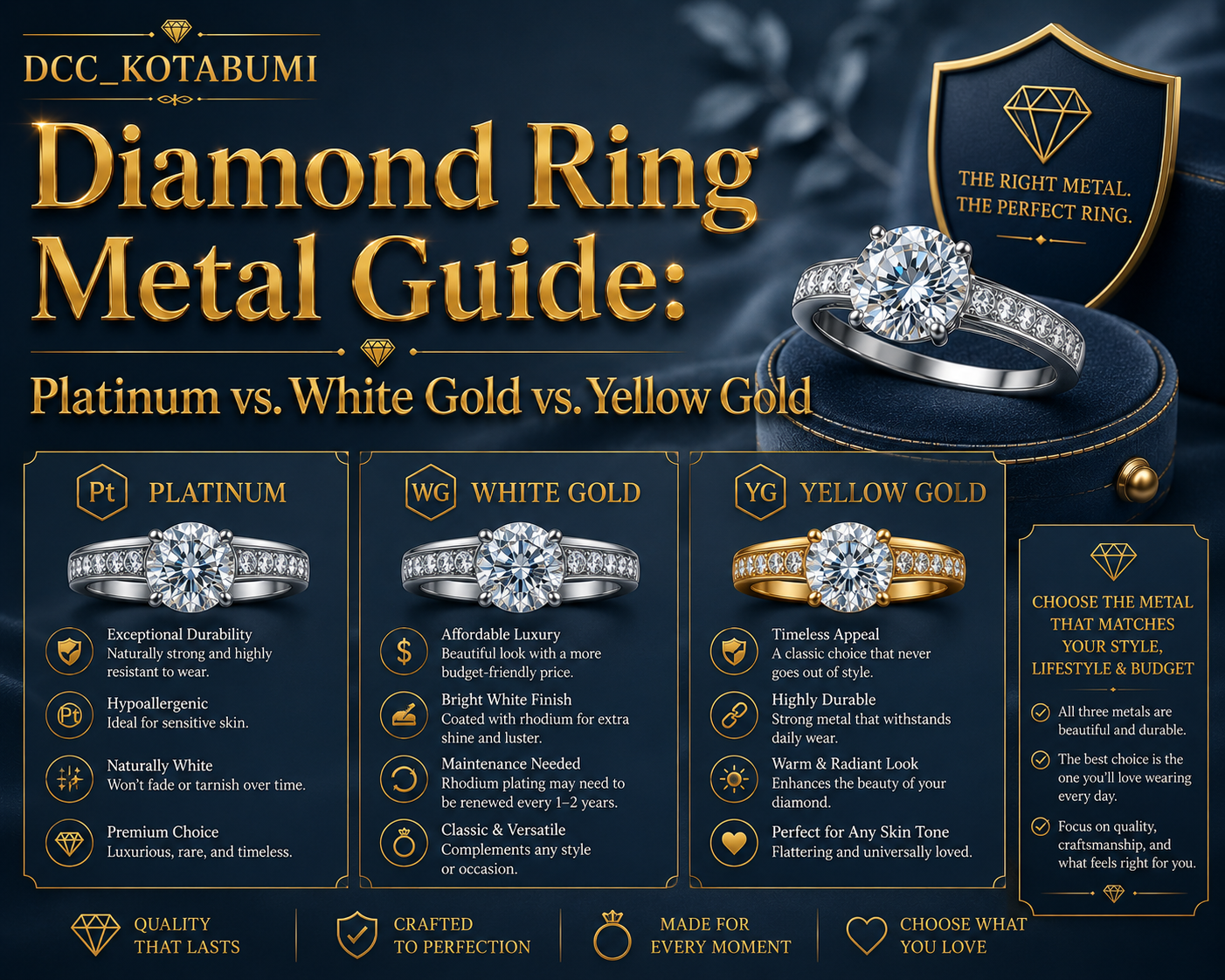
Diamond Ring Metal Guide
Choosing the right diamond ring is about more than finding the perfect stone. The metal you choose plays a major role in how the ring looks, feels, wears over time, and fits your budget. If you are comparing platinum vs. white gold vs.
yellow gold, you are not alone. These are the three most popular choices for diamond rings, and each one offers distinct advantages.
Some people love the bright, modern shine of white metals. Others prefer the warm, timeless beauty of yellow gold. Many buyers are drawn to platinum for its durability and prestige. The truth is that there is no single best choice for everyone.
The right option depends on your style, daily habits, maintenance preferences, and long-term expectations.
This diamond ring metal guide will help you understand the key differences between platinum, white gold, and yellow gold. By the end, you will know which metal best suits your lifestyle and why one choice may work better than another for your engagement ring, anniversary ring, or everyday diamond jewelry.
Why Ring Metal Matters for a Diamond Ring
When buyers focus only on the diamond, they often overlook how important the ring metal is. The setting affects the overall appearance of the diamond, the color contrast, the comfort of the ring, and how well it stands up to daily wear.
A ring metal influences:
The Overall Look of the Diamond
The same diamond can look slightly different depending on the metal around it. White metals such as platinum and white gold can make a diamond appear brighter and more colorless. Yellow gold creates a warmer, richer contrast that many people find classic and luxurious.
Durability and Daily Wear
A ring worn every day needs to handle friction, impact, and general wear. Some metals are naturally tougher, while others may scratch more easily or require more upkeep.
Maintenance Requirements
Some metals need regular replating or polishing to keep their appearance. Others develop a patina over time. Knowing what kind of maintenance you are comfortable with can help you make the right choice.
Budget and Value
Metal type can significantly affect the total cost of a diamond ring. Platinum is generally more expensive, while gold offers more flexibility across price points.
Platinum Diamond Rings: Premium, Strong, and Timeless
Platinum is often viewed as the luxury standard for fine jewelry. It is a naturally white metal known for its density, durability, and rarity. If you want a premium metal that feels substantial and elegant, platinum is a strong contender.
What Makes Platinum Unique
Unlike white gold, platinum is naturally white. It does not need rhodium plating to achieve its color. This means its appearance stays true over time, even though it may develop a soft patina.
Platinum is also denser than gold, so a platinum diamond ring usually feels heavier on the hand. Many people associate this weight with quality and craftsmanship.
Benefits of Platinum for Diamond Rings
Platinum offers several major advantages for daily wear and long-term value.
Excellent Durability
Platinum is extremely strong and secure, making it a popular choice for holding valuable diamonds. The prongs in platinum settings are known for their durability, which gives many wearers extra peace of mind.
Naturally Hypoallergenic
Because platinum used in jewelry is usually very pure, it is often a great choice for sensitive skin. If you have allergies to certain metal alloys, platinum may be the safest and most comfortable option.
No Replating Required
Platinum keeps its white tone naturally. You do not need to re-dip it in rhodium the way you often do with white gold.
Drawbacks of Platinum
Platinum is not perfect for every buyer.
Higher Price
Platinum is typically more expensive than white gold or yellow gold. This can affect how much of your budget remains for the center diamond.
Scratches and Patina
Although platinum is durable, it can still scratch. Instead of losing metal easily, it tends to shift slightly on the surface, creating a soft matte finish known as patina. Some people love this aged look, while others prefer a freshly polished shine.
White Gold Diamond Rings: Bright, Modern, and Popular
White gold is one of the most common choices for diamond engagement rings and fine jewelry. It offers a bright silvery appearance that resembles platinum, but usually at a lower price.
What Is White Gold
White gold is made by mixing yellow gold with white metals such as palladium, silver, or nickel. Because the natural color is not purely white, most white gold jewelry is coated with rhodium to create a bright, reflective finish.
White gold is available in different purities, most commonly 14K and 18K.
Benefits of White Gold for Diamond Rings
White gold remains a favorite for good reason.
Elegant and Versatile Look
Its bright finish pairs beautifully with diamonds and suits many ring styles, from minimalist solitaires to vintage halos and modern pavé settings.
More Affordable Than Platinum
If you want the look of a white metal without the higher cost of platinum, white gold offers strong visual appeal at a more accessible price.
Wide Style Availability
Because white gold is so popular, it is widely used in many ring designs. This makes it easy to find settings in different shapes, styles, and price ranges.
Drawbacks of White Gold
White gold has a few trade-offs that buyers should understand.
Needs Rhodium Replating
Over time, the rhodium coating wears away, revealing a slightly warmer tone underneath. To maintain a crisp white appearance, white gold rings may need periodic replating.
Possible Skin Sensitivity
Depending on the alloy mix, some white gold rings may contain nickel, which can irritate sensitive skin. If this is a concern, ask about nickel-free white gold options.
Less Dense Than Platinum
White gold is durable, but it is not as dense as platinum. For many buyers this is not a problem, but it is worth considering if long-term structural strength is a top priority.
Yellow Gold Diamond Rings: Warm, Classic, and Rich in Character
Yellow gold is one of the oldest and most beloved jewelry metals in the world. It has a warm glow that gives diamond rings a traditional, romantic, and luxurious feel.
For those who want a classic ring with timeless appeal, yellow gold remains an outstanding choice.
What Makes Yellow Gold Special
Yellow gold is created by mixing pure gold with alloy metals such as copper and silver to improve strength. It retains more of the gold’s natural warm color than white gold does.
Yellow gold is commonly available in 14K and 18K, with 18K offering a richer color and higher gold content.
Benefits of Yellow Gold for Diamond Rings
Yellow gold continues to stand out for many reasons.
Timeless Beauty
Yellow gold has a rich and classic look that never truly goes out of style. It works especially well in vintage-inspired, heirloom, and traditional ring settings.
Lower Maintenance for Color
Unlike white gold, yellow gold does not need rhodium plating to maintain its signature tone. Its color remains consistent with normal wear.
Flattering on Many Skin Tones
The warm hue of yellow gold can complement a wide range of skin tones and create a striking contrast with a white diamond.
Drawbacks of Yellow Gold
Yellow gold is beautiful, but it may not fit every taste or every diamond style.
Softer Appearance
Because of its warm tone, yellow gold can create a less icy look compared with platinum or white gold. If you want a very bright, modern appearance, a white metal may suit you better.
Visible Scratches Over Time
Like all precious metals, yellow gold can scratch with daily wear. While durable enough for regular use, it may require occasional polishing to keep its finish smooth.
Platinum vs. White Gold vs. Yellow Gold: Key Differences
To make the comparison easier, it helps to look at the main categories buyers care about most.
Appearance
Platinum has a naturally cool white tone with a soft elegance. White gold is bright, polished, and highly reflective. Yellow gold is warm, rich, and traditional.
Durability
Platinum is exceptionally strong and secure, making it ideal for daily wear and valuable stones. White gold is also durable, especially in 14K form. Yellow gold is reliable but may show wear a bit more visibly over time.
Maintenance
Platinum does not need replating, but it may develop patina. White gold usually needs rhodium replating to keep its bright white finish. Yellow gold keeps its color well and generally needs only basic polishing and care.
Price
Platinum is usually the most expensive option. White gold often offers the best balance between appearance and affordability. Yellow gold pricing varies by purity but is generally competitive with white gold.
Skin Sensitivity
Platinum is often the best choice for sensitive skin. Yellow gold can also be a good option depending on the alloy. White gold may cause irritation for some people if nickel is included.
Which Metal Makes a Diamond Look Best
This depends on the visual effect you want.
For a Bright, Colorless Look
Platinum and white gold are often preferred because they enhance the diamond’s crisp white sparkle. These metals are especially popular with modern bridal jewelry.
For a Warm, Vintage Feel
Yellow gold offers beautiful contrast and can make a ring feel more romantic and classic. It is especially attractive in antique-inspired designs or with diamonds that have a slightly warmer tone.
For Fancy Shape Diamonds
White metals often pair well with oval, pear, emerald, and princess cuts because they create a sleek and refined look. Yellow gold can add softness and richness, particularly with round and cushion cuts.
How to Choose the Best Metal for Your Lifestyle
The best diamond ring metal is not only about style. It is also about how you live.
Choose Platinum If
You want the most premium feel, excellent durability, low allergy risk, and a naturally white metal that does not require replating. Platinum is ideal for someone who wears their ring every day and values long-term strength over lower upfront cost.
Choose White Gold If
You love the look of platinum but want a more budget-friendly option. White gold is ideal for buyers who want a bright, contemporary ring and do not mind occasional maintenance.
Choose Yellow Gold If
You want warmth, tradition, and timeless beauty. Yellow gold is perfect for those who love classic jewelry, vintage aesthetics, and lower maintenance for color.
Best Metal Choice by Ring Style
Different metals naturally complement different ring styles.
Solitaire Diamond Rings
Platinum and white gold are excellent for solitaires because they keep the focus on the diamond. Yellow gold solitaires, however, offer a more classic and elegant feel.
Vintage-Inspired Rings
Yellow gold is often the top choice for vintage settings because it brings warmth and old-world charm. Platinum also works beautifully in detailed antique-inspired designs.
Halo and Pavé Rings
White gold and platinum are often favored because their bright tones blend seamlessly with smaller accent diamonds, creating a more continuous sparkle.
Heirloom and Traditional Rings
Yellow gold remains a favorite for heirloom-style pieces because of its rich, familiar appearance and enduring appeal.
Final Thoughts on Platinum vs. White Gold vs. Yellow Gold
When comparing platinum vs. white gold vs. yellow gold for a diamond ring, the best choice comes down to your priorities. Platinum is luxurious, strong, and naturally white. White gold is elegant, versatile, and budget-friendly. Yellow gold is warm, timeless, and full of character.
If you want the most durable and premium option, platinum is hard to beat. If you want the sleek beauty of a white metal at a lower cost, white gold is an excellent choice. If you love classic style and warm tones, yellow gold may be the perfect match.
A diamond ring is deeply personal, and the right metal should reflect your taste, lifestyle, and story. By understanding the strengths and differences of each option, you can make a confident decision and choose a ring that will remain beautiful for years to come.
FAQ About Diamond Ring Metals
Is platinum better than white gold for diamond rings
Platinum is often better for durability, purity, and long-term wear, but white gold is more affordable and still very attractive. The better choice depends on your budget and maintenance preferences.
Does yellow gold make diamonds look yellow
Yellow gold can add warmth around the setting, but it does not automatically make a high-quality diamond look yellow. In many designs, the contrast actually enhances the diamond’s beauty.
Which metal is best for everyday wear
Platinum is often considered the best for everyday wear because it is strong and secure. White gold and yellow gold are also suitable, especially when properly maintained.
Which ring metal is most affordable
White gold is usually more affordable than platinum. Yellow gold can also be budget-friendly depending on karat and design.
What is the most timeless metal for a diamond ring
Yellow gold is often seen as the most timeless and traditional, while platinum and white gold remain enduring choices for modern elegance.