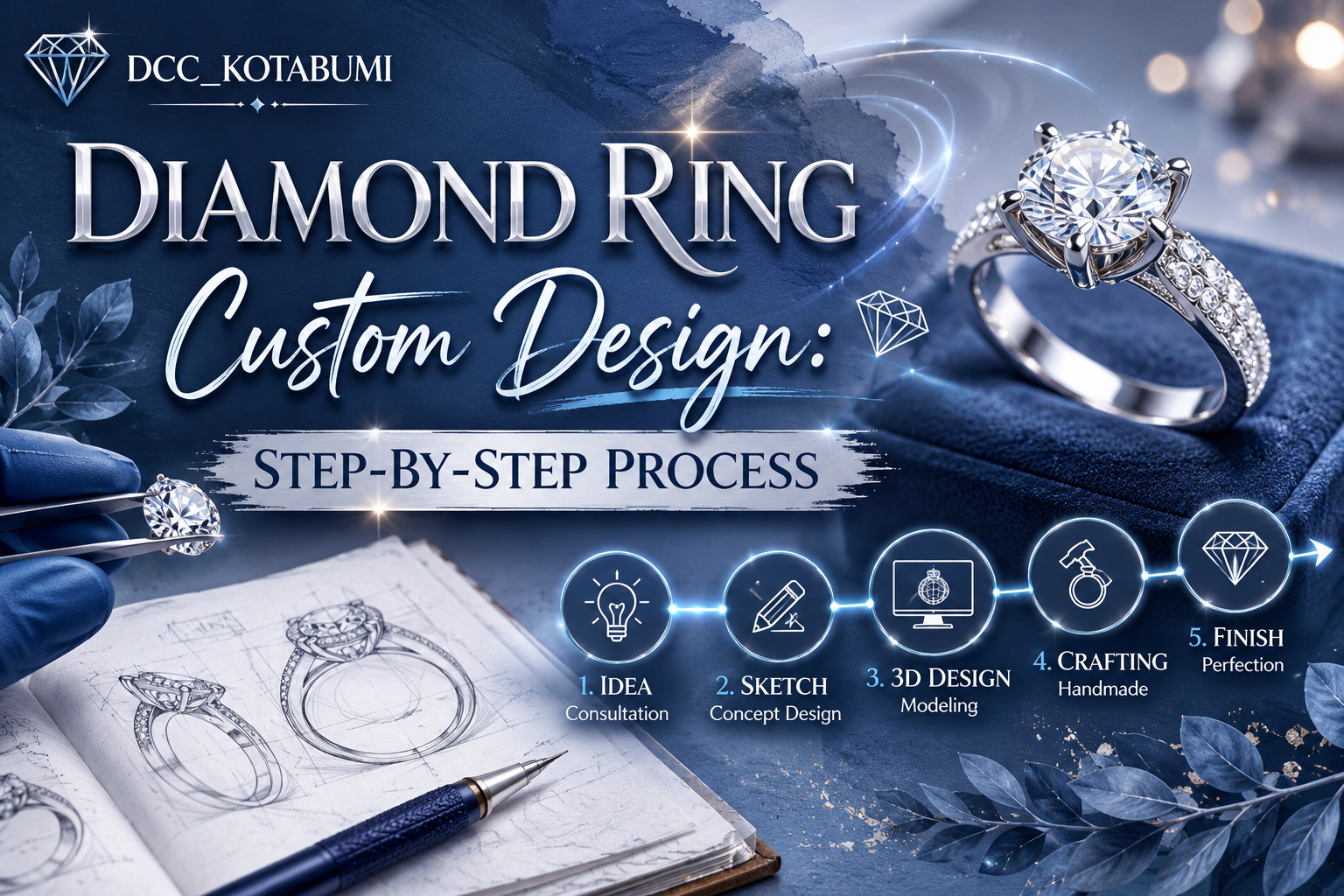
Diamond Ring Custom Design
Creating a custom diamond ring is one of the most meaningful ways to turn an idea into a piece of jewelry that feels deeply personal.
Whether you are designing an engagement ring, an anniversary gift, or a timeless heirloom, a custom process gives you control over every detail.
From the diamond shape to the metal type, from the setting style to the finishing touches, each decision helps create a ring that reflects your taste, budget, and story.
Many people assume custom jewelry is overwhelming or only meant for luxury buyers. In reality, the custom ring journey can be simple and exciting when you understand the steps.
With the right guidance, you can confidently move from inspiration to a finished ring that is both beautiful and practical.
This article explains the full diamond ring custom design process in a clear, step-by-step way. You will learn how to prepare, choose the right materials, work with a jeweler, review design drafts, and avoid common mistakes.
If you are planning to design a one-of-a-kind ring, this guide will help you do it smoothly.
Why Choose a Custom Diamond Ring Design?
A custom diamond ring offers something that ready-made rings cannot always provide: originality. Instead of selecting a design that thousands of other people may own, you get a ring built around your preferences.
There are several reasons why buyers choose a custom design:
Personal Expression
A custom ring allows you to reflect your personality or your partner’s style. You can choose minimalist elegance, vintage romance, modern geometry, or nature-inspired details.
Better Control Over Budget
Contrary to popular belief, custom does not always mean more expensive. You can prioritize the features that matter most, such as diamond size, clarity, or setting details, while adjusting other elements to stay within budget.
Unique Meaning
Many custom rings include symbolic touches such as birthstones, engraved dates, hidden halos, or design elements inspired by family history. These details make the ring more than jewelry.
Improved Fit and Comfort
When a ring is designed from scratch, comfort can be part of the plan. Band width, ring profile, and setting height can all be tailored to the wearer’s needs.
Step 1: Define Your Vision
The first step in the diamond ring custom design process is knowing what you want. You do not need a perfect design idea, but you should have a general direction.
Start by asking these questions:
What Is the Purpose of the Ring?
Is it an engagement ring, wedding ring, promise ring, anniversary ring, or personal investment piece? The purpose often influences the design style.
What Style Do You Prefer?
Consider these popular directions:
- Classic solitaire
- Halo design
- Three-stone ring
- Vintage-inspired ring
- Modern minimalist setting
- Floral or artistic custom design
What Diamond Shape Appeals to You?
Diamond shape has a major impact on the final look. Popular choices include:
- Round
- Oval
- Cushion
- Princess
- Emerald
- Pear
- Marquise
- Radiant
- Asscher
Each shape creates a different personality. Round diamonds feel timeless, oval diamonds look elegant and elongating, while emerald cuts deliver a clean and sophisticated look.
What Is Your Lifestyle?
A ring worn every day should match the wearer’s habits. Someone active may prefer a lower-profile setting that is less likely to snag or bump against surfaces.
Step 2: Gather Inspiration
Once you have a general vision, collect visual references. Inspiration helps you communicate better with a jeweler and makes the design process more efficient.
Look for inspiration from:
Jewelry Websites
Browse ring collections to identify the design elements you like, such as band thickness, prong style, or setting height.
Social Media Platforms
Save images that match your aesthetic. Focus on patterns. You may notice that you keep choosing oval stones, thin pavé bands, or vintage halos.
Family Jewelry
Old heirloom pieces can be a great starting point. You might want to modernize a family design while preserving sentimental value.
Design Notes
Write down exactly what you love in each reference image. One picture may have the perfect band, another may have the ideal side profile, and a third may show the right diamond shape.
Step 3: Set a Realistic Budget
Budget planning is essential in any diamond ring custom design project. Before meeting a jeweler, decide what you are comfortable spending.
A custom ring budget usually includes:
The Center Diamond
This is often the largest part of the cost. Price depends on the 4Cs:
Cut
Cut affects brilliance and sparkle. A well-cut diamond can look more impressive than a larger but poorly cut stone.
Color
Color grades range from colorless to more noticeable warmth. The best choice depends on your preferences and metal type.
Clarity
Clarity measures internal and external imperfections. Many diamonds appear clean to the naked eye even if they are not flawless.
Carat
Carat refers to weight, not visual size alone. Some shapes look larger than others at the same carat weight.
The Setting and Metal
Your metal choice affects both cost and appearance. Common options include:
- Platinum
- White gold
- Yellow gold
- Rose gold
Platinum is durable and premium, while gold offers flexibility in style and budget.
Design Complexity
Simple solitaires cost less to produce than elaborate rings with intricate pavé work, halos, engraving, or hidden details.
Extra Services
These may include resizing, engraving, insurance appraisal, and premium packaging.
A clear budget helps your jeweler suggest better options without wasting time on unrealistic choices.
Step 4: Choose the Right Jeweler
The jeweler you choose plays a huge role in the success of your custom ring. A skilled jeweler will guide you, explain trade-offs clearly, and turn your ideas into a practical, wearable design.
Look for a jeweler who offers:
Strong Custom Design Experience
Review their previous custom work. Make sure their style range matches what you want.
Transparent Communication
A good jeweler should explain timelines, pricing, design revisions, and material options in simple language.
Diamond Education
They should help you compare diamonds honestly rather than simply pushing the most expensive stone.
CAD or Hand-Sketch Design Options
Most custom jewelers use CAD, or computer-aided design, to create accurate digital models. Some may also begin with hand sketches.
Clear Policies
Check policies for deposits, revisions, production time, returns, and warranty coverage.
Step 5: Select the Center Diamond
After choosing your jeweler, the next major step is selecting the center stone. This is the heart of the ring.
When choosing a diamond, think beyond size alone.
Prioritize Cut Quality
If sparkle matters to you, cut quality should be one of your top priorities. A beautifully cut diamond can outperform a larger stone with poor proportions.
Consider Shape and Finger Coverage
Oval, pear, and marquise diamonds tend to create more finger coverage than round diamonds of the same carat weight.
Balance Color and Metal Tone
Yellow and rose gold can pair beautifully with slightly warmer diamonds, while white gold and platinum often emphasize whiter stones.
Focus on Eye-Clean Clarity
You do not always need a very high clarity grade. Many buyers save money by selecting diamonds that look flawless to the eye, even if they have minor inclusions under magnification.
Decide Between Natural and Lab-Grown
Some custom buyers prefer natural diamonds for rarity, while others choose lab-grown diamonds for value and size advantages. Both can be excellent depending on your goals.
Step 6: Design the Setting
Now the ring starts to take shape. The setting is what holds the diamond and defines the overall style.
Key design decisions include:
Setting Style
Popular setting styles include:
-
Solitaire
-
Halo
-
Hidden halo
-
Three-stone
-
Bezel
-
Cathedral
-
Vintage-inspired setting
Each style changes the ring’s silhouette, sparkle, and durability.
Band Design
Think about:
- Band width
- Plain or pavé band
- Straight or tapered band
- Knife-edge or rounded profile
A thin band looks delicate, while a wider band can feel bold and durable.
Prong Style
Prongs are small but important. They affect both security and visual appearance. Common choices include four-prong, six-prong, claw prongs, and double prongs.
Side Stones or Accent Details
You may want side diamonds, hidden stones, milgrain edges, engraved details, or mixed-metal features.
Step 7: Review the Sketch or CAD Model
This is one of the most important parts of the diamond ring custom design process. Before production begins, your jeweler will usually present a sketch or a 3D CAD rendering.
Study it carefully.
Check the Overall Proportions
Make sure the diamond size, band width, and setting height feel balanced.
Review the Side Profile
The side view often reveals details you may overlook from the top. Check how high the stone sits and whether the ring will be practical for daily wear.
Confirm Small Details
Look at prongs, accent stone placement, engraving patterns, and hidden design features.
Ask for Changes Early
This is the best stage to request revisions. Adjusting a digital design is far easier than changing a completed ring.
Step 8: Approve Materials and Final Specifications
Before the ring goes into production, confirm every technical detail.
This includes:
Metal Type and Purity
For example:
- 14K white gold
- 18K yellow gold
- Platinum 950
Diamond Specifications
Confirm the center stone details and any side stones included in the design.
Ring Size
Accurate sizing matters. A custom ring should fit well from the beginning, especially if the design has stones around the band that make resizing harder.
Finish Type
Choose polished, matte, brushed, or hammered finishes depending on the style.
Step 9: Production and Crafting
Once approved, the jeweler begins making the ring. This stage may involve casting, stone setting, polishing, engraving, and final inspection.
The exact process varies, but often includes:
Wax Model or Resin Model Creation
Some jewelers create a physical model before casting the final piece.
Casting the Metal
The ring is formed in the chosen metal using the approved design file.
Stone Setting
The center diamond and accent stones are carefully secured.
Finishing Work
This includes polishing, texture work, engraving, and quality checks.
Patience matters here. A custom ring takes time because each step requires precision.
Step 10: Final Inspection and Delivery
Before accepting the ring, inspect it closely.
Check the Diamond Security
Make sure the stone feels secure and properly aligned.
Review the Finish
Examine polish, engraving, symmetry, and craftsmanship.
Confirm Comfort
Try the ring on and notice how it feels on the finger. Comfort is just as important as appearance.
Ask for Documentation
You should receive relevant paperwork such as:
- Diamond certificate
- Receipt
- Appraisal
- Warranty details
- Care instructions
Common Mistakes to Avoid in Custom Ring Design
Even a well-planned project can go wrong if small details are ignored.
Rushing the Process
Custom design needs thoughtful decisions. Last-minute pressure can lead to regrets.
Copying a Photo Exactly
Use inspiration images as guidance, not strict templates. A good jeweler will adapt ideas to your preferences and comfort needs.
Ignoring Practical Wearability
A ring should not only look beautiful in photos. It should also work for everyday life.
Focusing Only on Carat Size
Bigger is not always better. Balance, cut, and design matter just as much.
Not Asking Questions
If you do not understand something, ask. A good jeweler will welcome your questions.
Tips for a Smooth Diamond Ring Custom Design Experience
To make the process easier and more enjoyable, keep these tips in mind:
Be Honest About Budget
Clear numbers help create better recommendations.
Stay Open to Expert Advice
A jeweler may suggest design changes that improve durability or beauty.
Prioritize What Matters Most
Choose your must-haves first. It may be the center diamond, a hidden halo, or a platinum setting.
Think Long Term
Trends come and go. Custom rings often feel more special when they balance personality with timeless appeal.
Final Thoughts
The diamond ring custom design journey is not just about jewelry. It is about turning an idea, memory, or emotion into something you can wear for years.
When broken into clear steps, the process becomes much more approachable. You begin with inspiration, define a budget, choose a jeweler, select a diamond, refine the setting, approve the design, and then watch the ring come to life.
A custom ring gives you the chance to create something truly yours. It can reflect style, love, heritage, and intention in ways that standard rings often cannot.
By understanding the diamond ring custom design step-by-step process, you can make better choices, avoid common mistakes, and enjoy a final result that feels personal and lasting.
If you are ready to design your own ring, start with a clear vision and work with a jeweler who listens well. The result can be a ring that is not only beautiful, but also meaningful in every detail.